Are Scottsdale’s Luxury Buyers Living There Full-Time Now?
Yes. Across Paradise Valley, Scottsdale, and Arcadia, luxury buyers are increasingly purchasing and renovating homes for year-round living rather than seasonal use. The clearest evidence isn’t in a survey — it’s in the renovation permits and buyer requests we see every week: Tuscan-era finishes are being replaced with contemporary interiors, RV garages are becoming home gyms and studios, and guest casitas are being built with full kitchens for extended family stays. Long club waitlists at communities like DC Ranch, Silverleaf, and Ancala Country Club are a further sign that buyers are planting roots, not just wintering here.
By Teresa Hague | October 23, 2026
If you’ve toured a handful of listings in Paradise Valley or North Scottsdale this year, you’ve probably noticed something: the houses don’t look like they used to. The travertine floors, the faux-painted walls, the Venetian plaster archways that defined this market for two decades are quietly disappearing. What’s replacing them — clean-lined cabinetry, honed stone, pared-back palettes — isn’t just a style preference. It’s a signal about how people intend to actually live in these homes. And once you start reading a property this way, you can’t stop seeing it.
This shift matters whether you’re preparing to sell, shopping for your own full-time residence, or deciding what to renovate before you list. The homes winning multiple offers right now aren’t necessarily the biggest or the most ornate — they’re the ones that read as “lived in daily,” not “closed up from May to October.”
The Design and Behavioral Signals Buyers Are Looking For
A seasonal home and a full-time home are built for different lives, and the differences show up in specific, identifiable features.
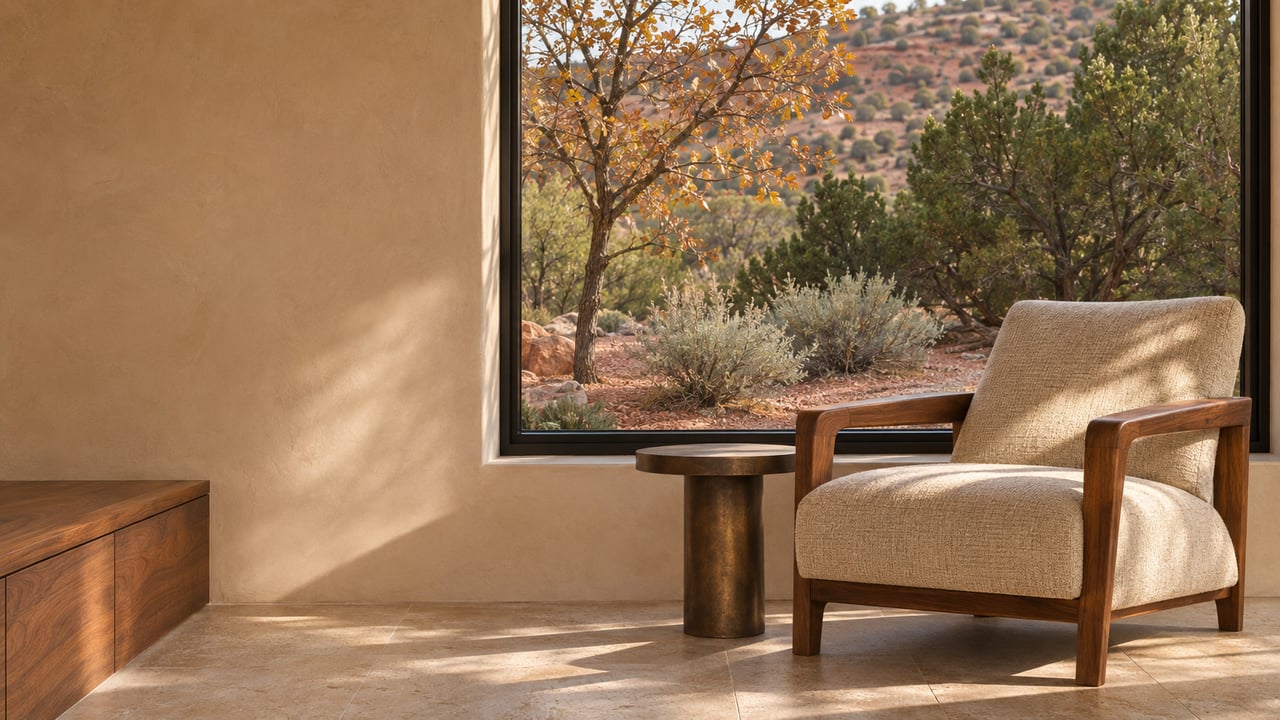
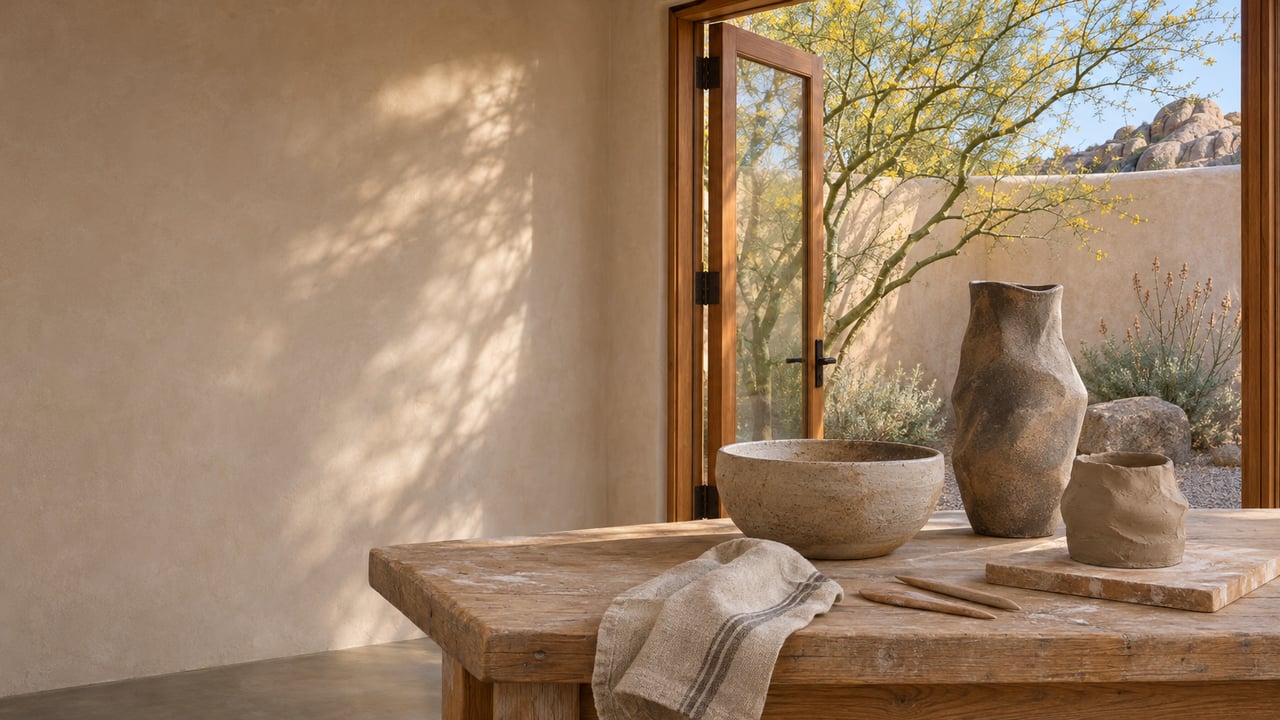
Interiors are shedding the Tuscan era. For years, travertine flooring, faux finishes, and Venetian plaster were the signature of Scottsdale luxury design. That look was built for a home that needed to photograph well and feel resort-like for a few months a year. What’s replacing it — warm minimalism, honed natural stone, integrated indoor-outdoor sightlines — is built for a household that uses every room, every day, in every season. Leading Estates’ recent analysis of this transition in Scottsdale points to the same pattern we’re seeing on the ground: owners are investing in finishes that hold up to daily life, not just seasonal display.
RV garages are being converted into functional space. These oversized bays were once prized almost entirely for toy and vehicle storage — a seasonal luxury for owners who arrived with a motorhome or a car collection and left it parked the rest of the year. Today, we’re seeing those same bays reimagined as home gyms, workshops, and private studios. That’s a decision only a full-time household makes. You don’t build a daily-use gym into a garage you only occupy twelve weeks a year.
Casitas are getting kitchens. A guest house used to mean a bedroom and a bathroom — enough for a weekend visitor. Now we’re seeing fully equipped casitas with full kitchens and separate living quarters, built to host adult children, aging parents, or extended family for weeks or months at a time. That’s a primary-residence feature, designed around an owner who expects regular, sustained family presence rather than occasional company.
Wellness rooms are becoming standard asks. Dedicated massage and wellness rooms — once a rare, ultra-custom request — are showing up more often in renovation plans and new builds alike. It’s part of the same pattern: owners are designing for the rhythm of everyday life, not for a home that sits dormant for most of the year.
Club waitlists are stretching out. Membership waitlists at DC Ranch, Silverleaf, and Ancala Country Club have grown long enough that buyers are asking about membership timelines before they’ve closed on a home. A long waitlist is a reasonable thing to tolerate if you’re going to use that club calendar, dining room, and fitness center year-round. It’s a much harder pill to swallow for three months of use a year — which tells you something about how today’s buyers are planning to live.
Why This Is Happening Now
None of this is happening in a vacuum. Two forces are converging, and they’re both financial rather than demographic.
The first is simple tax math. Arizona’s flat 2.5% income tax rate stands in sharp contrast to California’s top marginal rate of 13.3% — one of the highest in the country. For a high-net-worth household, that gap compounds every year a primary residence stays in place. Establishing Arizona as a true primary residence, not just a part-year retreat, is what actually captures that tax benefit, and that distinction is pushing buyers toward the full renovation and lifestyle commitment we’re describing here, not just a part-time footprint.
The second is a shift in where relocation demand is coming from. Buyers moving from California — particularly the Los Angeles and Bay Area markets — are driving much of this full-time purchasing activity, often relocating a primary household and a primary income source along with it. That’s different from the historical pattern in this market, where seasonal ownership was filled in no small part by owners wintering here and returning north for the rest of the year. The buyer profile hasn’t just grown; the way these buyers intend to use their homes has changed.
If you want the fuller migration data behind this trend — where buyers are coming from and in what numbers — that’s a conversation for a separate piece we’ve written on relocation patterns into this market. This one is about what that shift looks like inside the house.
What It Means If You’re Buying, Selling, or Renovating
If you’re selling, your renovation choices should answer the question buyers are actually asking: could I live here every day? A home still wearing its Tuscan-era finishes can read as dated to a buyer who’s mentally planning a full-time move, even if the bones are excellent. Before you invest in cosmetic updates, we walk sellers through exactly which finishes are reading as “seasonal” to today’s buyer pool and which upgrades return the most at closing.
If you’re buying, pay attention to how a home was actually used by its current owner. A converted RV garage, a casita with a full kitchen, or recent interior updates away from Tuscan styling are all signs the property has already been adapted for daily living — which can save you a renovation cycle and tell you something about the neighborhood’s trajectory.
If you’re renovating before you list, prioritize the features that signal full-time livability over the features that signal seasonal luxury. A functional home gym or flexible studio space in an underused garage bay is, for many of today’s buyers, worth more than an additional vehicle bay. A casita with real living quarters outperforms a casita that’s just an oversized guest room.
Every property and every situation is different, and the right renovation strategy depends on your specific home, timeline, and target buyer. That’s exactly the kind of decision worth talking through before you spend a dollar on updates or put a home on the market.
Frequently Asked Questions
Why are Tuscan-style interiors disappearing from Scottsdale luxury homes?
Tuscan finishes like travertine, faux painting, and Venetian plaster were popular during an era when many high-end homes here functioned as seasonal retreats. As more buyers purchase these homes as full-time primary residences, demand has shifted toward contemporary, low-maintenance finishes designed for daily use rather than occasional display.
What does an RV garage conversion signal to a luxury home buyer?
A converted RV garage — turned into a home gym, workshop, or studio — signals that the current owner uses the home year-round rather than seasonally. Full-time residents generally get more daily value from flexible living space than from vehicle storage they’d only use part of the year.
Does Arizona’s income tax rate actually influence luxury relocation decisions?
It’s a meaningful factor for many high-net-worth buyers. Arizona’s flat 2.5% income tax rate compares favorably to California’s top marginal rate of 13.3%, and establishing genuine primary residency in Arizona is part of how buyers capture that difference, which can make a full-time move more financially attractive than part-time ownership.
Should I renovate my Tuscan-style home before selling in today’s market?
It depends on your specific home, your price point, and your target buyer, but many sellers are finding that updating dated Tuscan finishes helps a property read as move-in ready for today’s full-time buyer pool. The right scope of work varies enough that it’s worth a direct conversation about your property before committing to a renovation budget.
The homes selling fastest and for the strongest prices across Paradise Valley, Scottsdale, and Arcadia right now are the ones that read as built for everyday life — not for a few months on the calendar. Whether you’re deciding what to update before you list, or you simply want to understand how your own home’s design choices are being read by today’s buyers, that’s worth a direct conversation before you make any public move. If keeping your sale out of the public eye matters to you, ask us about Invisible Seller — no yard sign, no MLS listing, no public record of price adjustments or time on market, and no trace at all if you decide not to sell.
About Teresa Hague
Teresa Hague leads Hague Luxury Network, Arizona’s leading luxury real estate team, specializing in high-end homes and estates in Paradise Valley, Scottsdale, Arcadia, and neighboring premier communities. The team combines local market intelligence, powerful digital marketing, and the 72SOLD Luxury platform to help luxury home sellers achieve maximum exposure and exceptional results — with a curated, full-service experience from pricing strategy and preparation to photography, film, and negotiation.